Why indoor applications carry fewer material demands
A cable seals used on an indoor cabinet, warehouse container, or climate-controlled storage point generally faces stable temperature and humidity conditions, meaning a standard specification typically performs reliably without needing extra weather resistance. JHAS
What outdoor exposure actually demands from a seal
Outdoor applications, truck and trailer doors, rail wagon closures, and outdoor equipment cabinets expose a seal to direct sunlight, rain, temperature swings, and airborne dust or salt in coastal areas, all of which can affect material performance over extended exposure.
UV resistance and material stability outdoors
Extended sun exposure can degrade some plastic components over time, making UV-stable material specification a genuine consideration for cable seals that will spend weeks or months exposed to direct sunlight during transport or outdoor storage, since added weather resistance directly affects service life. Follow us JHAS
Corrosion resistance for coastal and humid environments
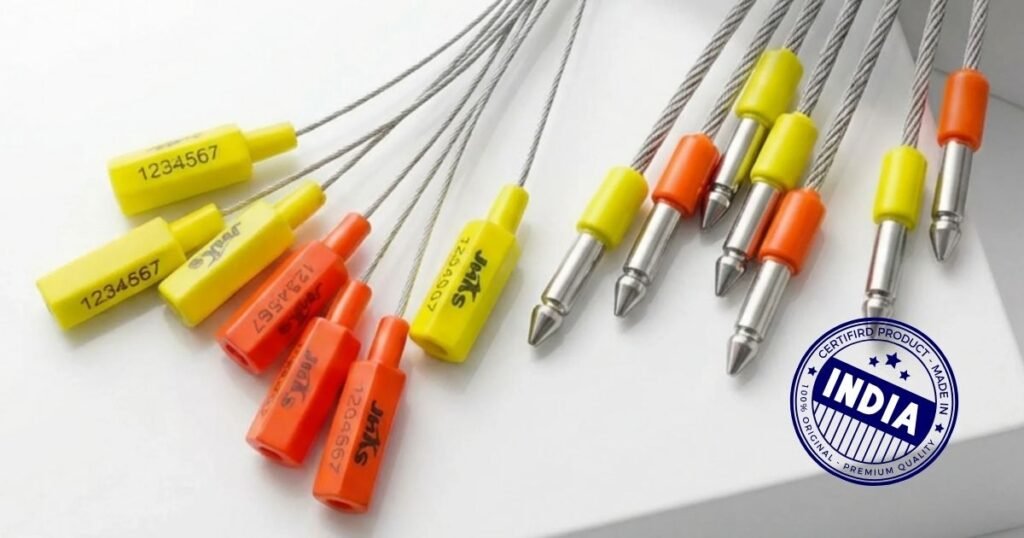
Metal components in a cable seal need appropriate corrosion resistance for applications near coastal areas or in consistently humid environments, since corrosion can compromise both the seal’s strength and its tamper-evident function. JHAS
Why seasonal conditions matter for long-duration applications
A cable seal applied to equipment or cargo that will sit outdoors across changing seasons, through monsoon humidity and summer heat alike, needs a specification genuinely tested for this kind of sustained variable exposure, not just a single condition.
Matching specification to actual exposure duration
A seal applied briefly during a short outdoor transfer faces less cumulative exposure than one left in place for weeks on stored outdoor equipment, meaning exposure duration should factor into the specification decision alongside conditions alone. Follow us JHAS