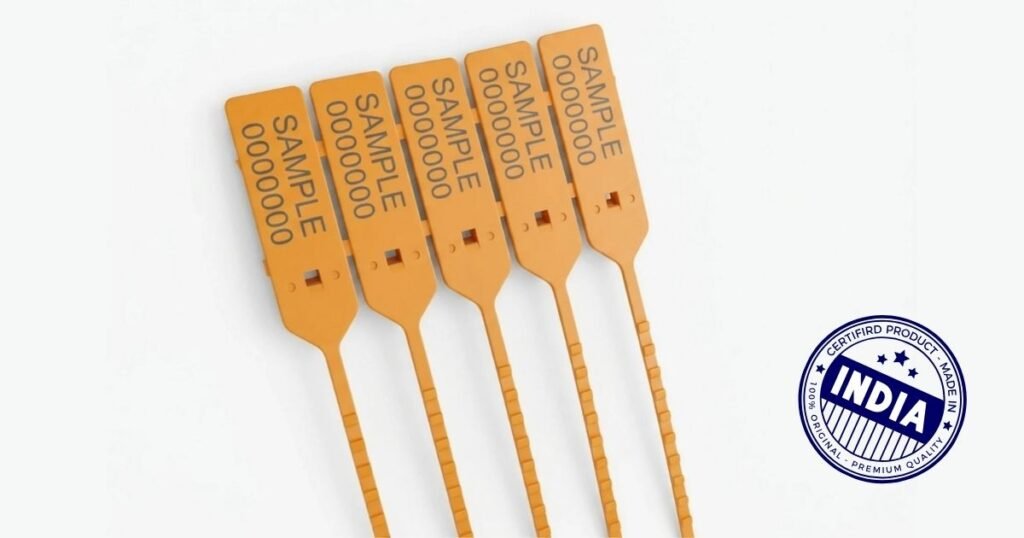
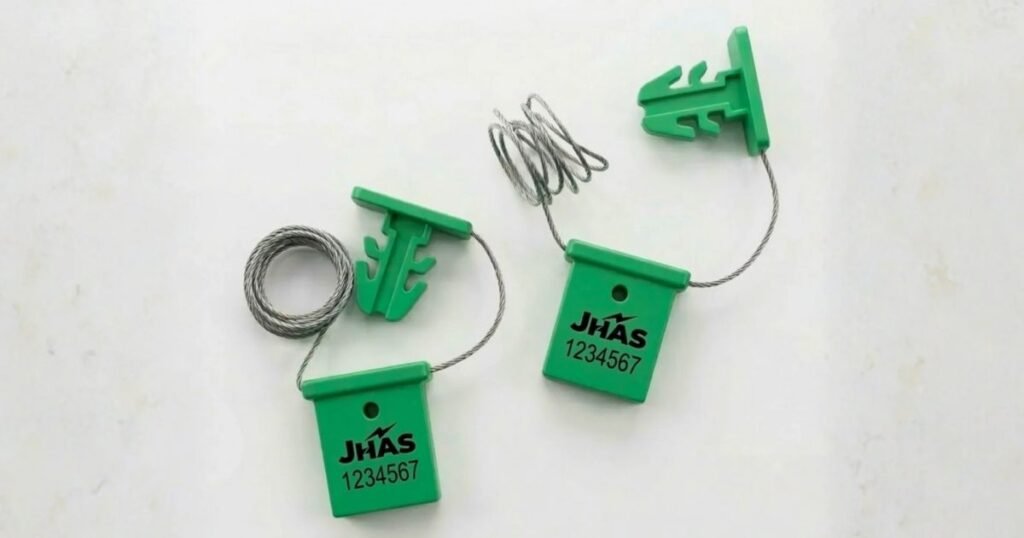
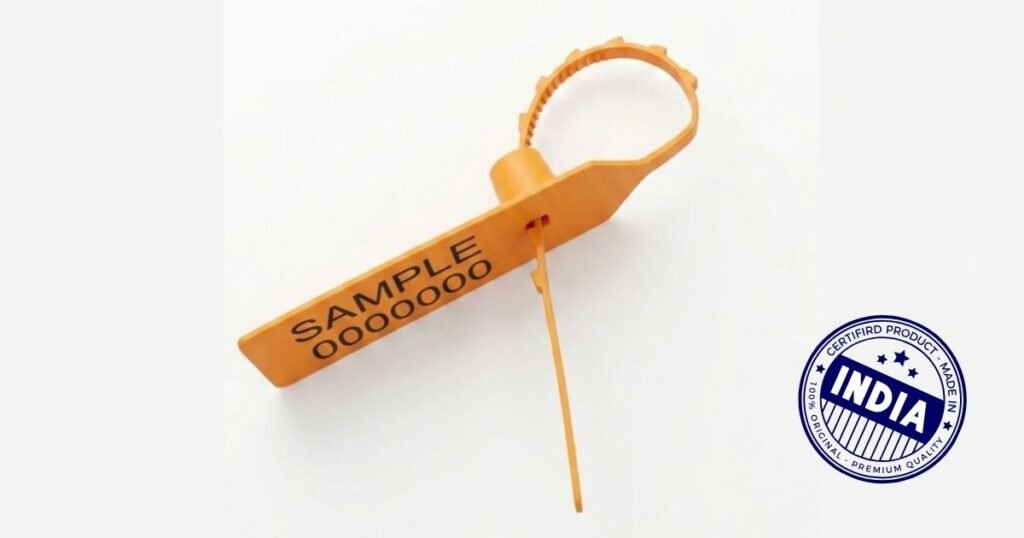
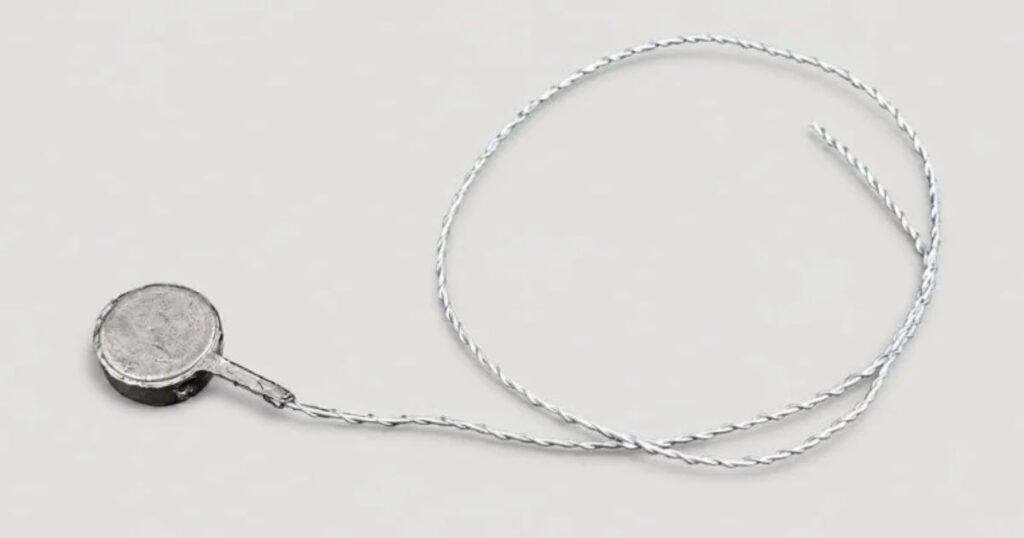
Pull tight strip seals versus plastic with wire seals.
Strip seals apply faster and cost less per unit, suiting high-volume, lower-risk applications. Wire seals offer greater mechanical strength for larger or higher-value openings where cutting resistance matters more than application speed. JHAS Industries
Pull tight strip seals versus metal cable lock seals.
Metal cable lock seals offer significantly higher cutting resistance, suited to high-security applications like container doors or edible oil tankers, while strip seals suit lighter-duty, faster-turnaround applications like courier bags.
Pull tight strip seals versus padlock-style seals.
Padlock seals typically offer a bulkier, more visually obvious security presence, useful for applications like wagon doors or panel cubicles, while strip seals suit flatter, tighter closure points where a bulkier lock format wouldn’t fit well. Follow us JHAS Industries
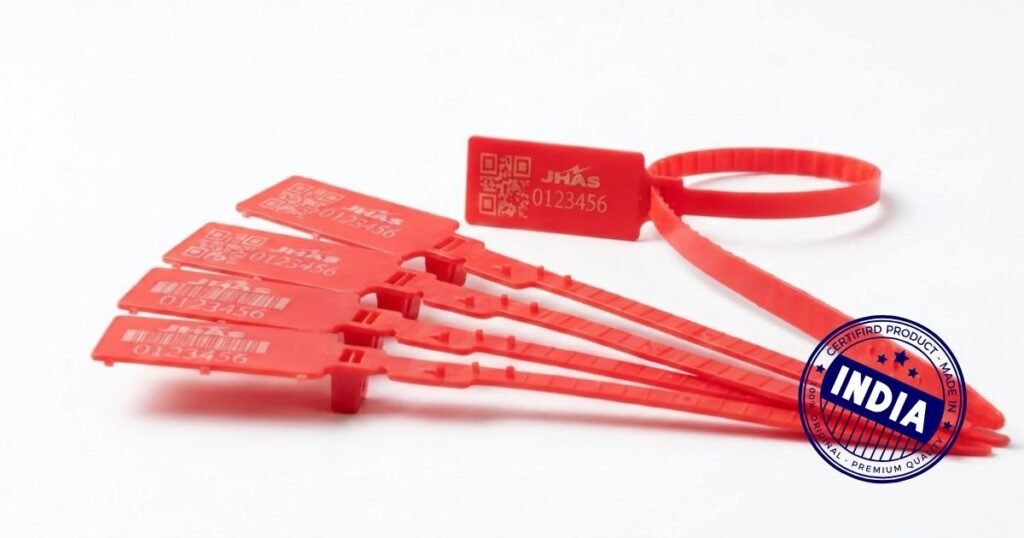
Pull tight strip seals versus bolt seals.
Bolt seals offer the highest tensile strength among common seal formats, suited to container and trailer doors carrying high-value cargo, while strip seals suit applications where extreme mechanical strength isn’t the primary requirement. JHAS Industries
How to decide which format fits your application
Weigh the value and risk profile of what you’re securing against the cost and application speed you need. High-value, high-risk cargo generally justifies a stronger seal format, while high-volume, lower-risk applications favor strip seals’ speed and cost advantage.
Using multiple formats across a single operation
Many logistics and utility operations use different seal formats for different parts of their operation, strip seals for routine parcel handling, wire or cable seals for higher-value shipments, rather than standardizing on a single format for everything. Follow us JHAS Industries