The common thread across every application
Electricity, gas, and water meters get the most attention in discussions of meter seals, largely because residential utility billing is the highest-volume application by unit count. But the underlying logic, a reading that both parties need to trust without one of them being physically present when it was taken, shows up in plenty of places that never get called out in everyday conversation. Anywhere a billing, regulatory, or contractual outcome depends on an unwitnessed measurement, a tamper-evident seal is usually doing quiet work somewhere nearby. JHAS Industries
Fuel dispensers and petrol pumps
Fuel dispensers at retail stations are calibrated and sealed by weights and measures authorities specifically to prevent tampering that would shortchange customers on volume, a concern regulators take seriously enough that a broken calibration seal on a pump typically triggers an immediate compliance issue, not just a maintenance note. These seals function almost identically to utility meter seals, sealing the calibration mechanism itself rather than a billing display, so that any adjustment to the dispenser’s measurement accuracy leaves the same kind of unmistakable evidence a tampered electricity meter would.
Industrial flow meters in business-to-business billing
Where one company supplies a measured quantity, water, gas, chemicals, fuel, to another under a contract priced by volume, the flow meter at the transfer point often needs the same tamper evidence as a residential utility meter, just at a much larger scale and often a much higher value per reading. A seal on an industrial flow meter protects both parties in the transaction, giving the supplier confidence the buyer hasn’t adjusted the reading downward, and giving the buyer the same confidence in reverse if billing runs the other direction. Follow us JHAS Industries
Weighing scales and calibrated equipment
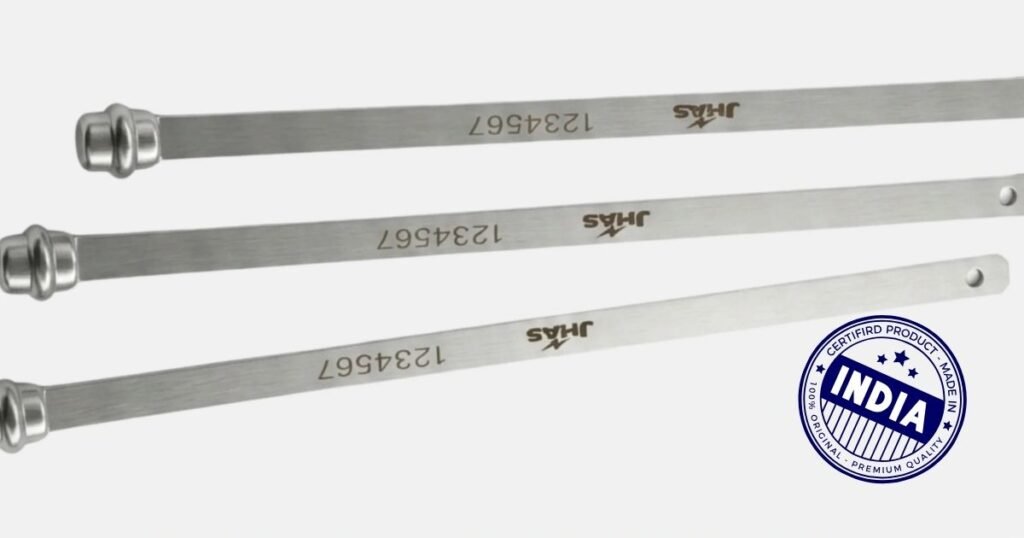
Commercial weighing scales used in trade, at a grain mandi, a scrap metal yard, or a freight weighbridge, are typically sealed after calibration by the certifying authority for much the same reason as a fuel dispenser. The seal doesn’t prevent someone from attempting to recalibrate the scale improperly, but it makes any such attempt immediately visible to the next inspector or auditor who checks it, which is usually enough of a deterrent on its own. JHAS Industries
Why these applications sometimes get overlooked
Utility meters get standardized sealing programs because a single distribution company manages thousands of them centrally. Fuel dispensers, industrial flow meters, and weighing scales are often owned and sealed by many smaller, independent parties, which means there’s less pressure toward a single standardized seal format or color scheme across an entire sector. This doesn’t make sealing any less important in these applications; it just means the sealing decision tends to sit with individual business owners or local regulatory offices rather than a large centralized utility, and it’s worth reviewing on its own merits rather than assuming utility practice automatically applies.