The mechanics behind a bolt seal
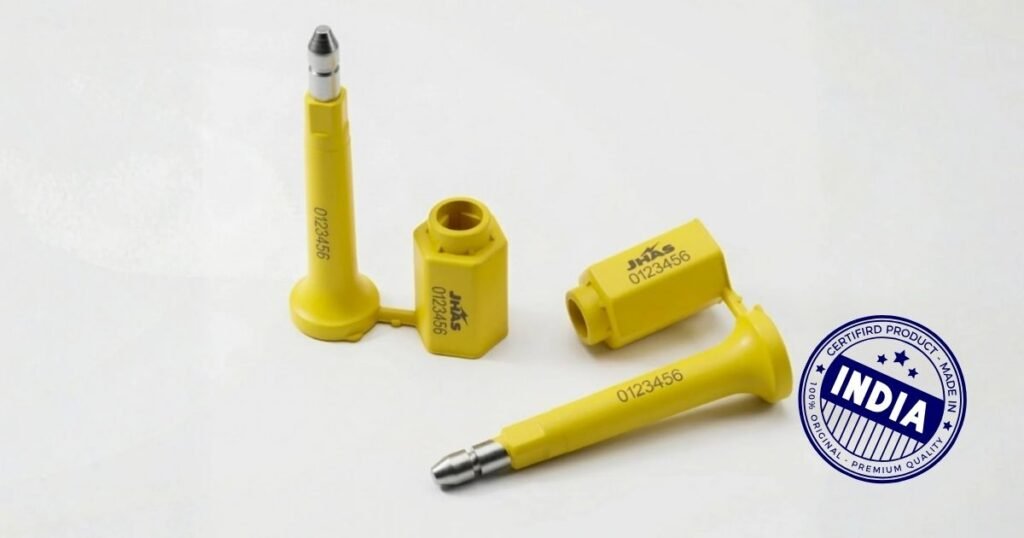
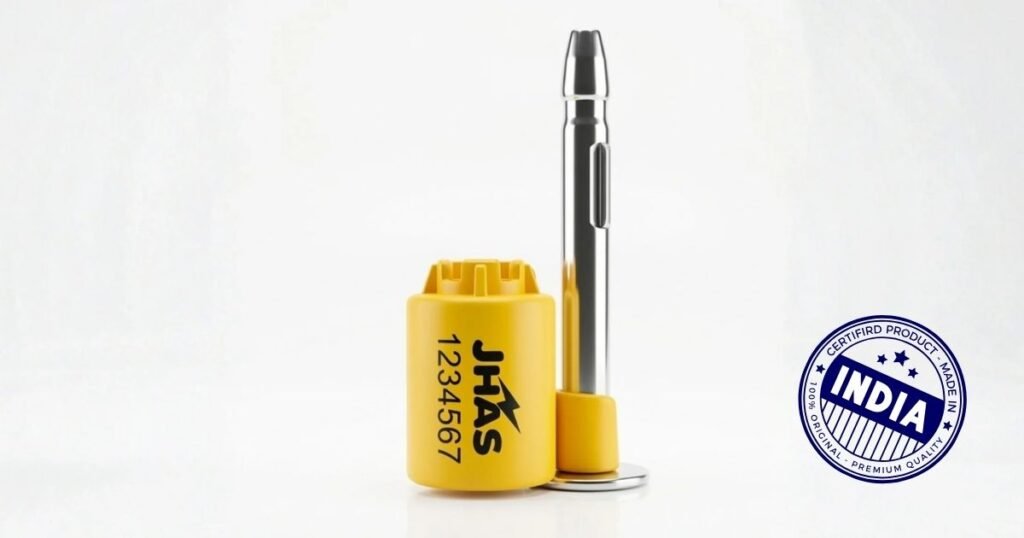
A bolt seal has two parts. A metal pin with a mushroom-shaped head and a barrel-shaped receiver body. The pin slides into the receiver and locks against internal teeth or a ball-bearing mechanism, so it can go in but cannot come back out. Once locked, the only way to separate the two is to cut through the pin itself, usually with bolt cutters, a hacksaw, or an angle grinder, and every one of those methods leaves obvious, unmissable damage. That single-direction locking action is what makes a bolt seal different from a pull-tight or cable seal. There is no ratchet strap to slice through quietly. The steel pin has to be physically severed, which takes time, tools, and noise, none of which a driver stopping at a random point along a route can produce without drawing attention. JHAS Industries
Where bolt seals earn their keep
Container doors are the most common application, since the bolt threads directly through the locking rods on a standard shipping container and holds the doors shut across the entire journey. Trucks, trailers, tankers, and rail wagons use the same principle on their own latch points. Bolt seals also show up in places that are not obviously “cargo” at all. Utility companies use them on meter panels and switchgear cabinets where a full lockout is not practical but tamper evidence is mandatory. Warehouses use them on high-value storage cages where a simple plastic seal would not survive routine handling.
Breaking strength and what the numbers mean
Bolt seals are usually rated by the force needed to break the pin, commonly somewhere in the range of 1,000 to 2,500 pounds depending on the pin’s material and diameter. Higher is not automatically better for every job. A seal rated well beyond what the application needs mostly adds cost without adding practical security, since the receiver housing and the door hardware itself often become the weaker point before the pin does.What matters more than the raw number is matching the seal to the standard your freight lane actually requires. Seals built for international ocean freight are generally expected to meet ISO 17712 High Security classification, and for shipments into the United States, C-TPAT compliance is effectively non-negotiable if you want to avoid delays at the port. Follow us JHAS Industries
Anti-spin design and why it is worth asking about
Cheaper bolt seals can sometimes be defeated by spinning the pin rapidly enough to generate heat and weaken the lock, rather than cutting it outright. Better-built bolt seals use a hex or anti-spin pin design specifically to stop that shortcut. It is a small manufacturing detail that rarely comes up unless you ask directly, which is exactly why it is worth asking. JHAS Industries
Printing, color, and record keeping
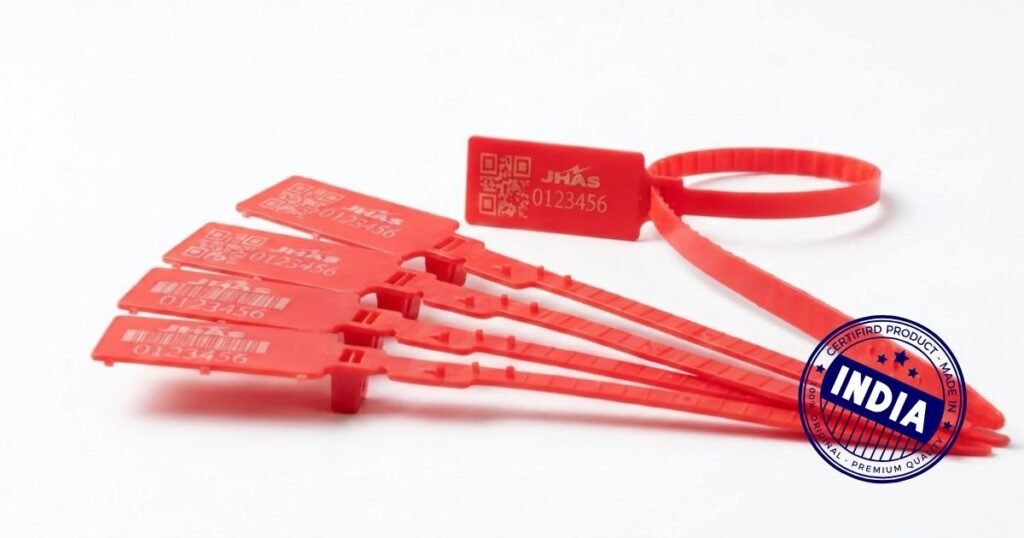
Every bolt seal worth using ships with a laser-marked serial number on the receiver, often paired with a barcode or 2D code for scanning at the gate. Colour options exist mainly for quick visual sorting between routes, shifts, or client accounts rather than security itself, though they do help a yard supervisor spot the wrong batch of seals on the wrong truck before it leaves
Installing and checking a bolt seal correctly
Push the pin fully into the receiver until it clicks and cannot be pulled back by hand. Record the seal number against the shipment paperwork immediately, not at the end of the shift. At the receiving end, check the number first, then inspect the receiver housing for any sign of re-gluing or a mismatched pin before assuming the seal itself is intact.